Feeling stuck in midlife can make one rough chapter feel like the whole damn book.
What does feeling stuck in midlife usually mean?
Feeling stuck in midlife usually means your life still functions, but the story inside it has stopped moving. You may look responsible from the outside while feeling restless, boxed in, or quietly disappointed on the inside.
If that sounds familiar, start by naming the pattern. Then compare it with stability vs stagnation, take the Midlife Reality Check, or read The Permission Tax if waiting for approval is part of the problem.
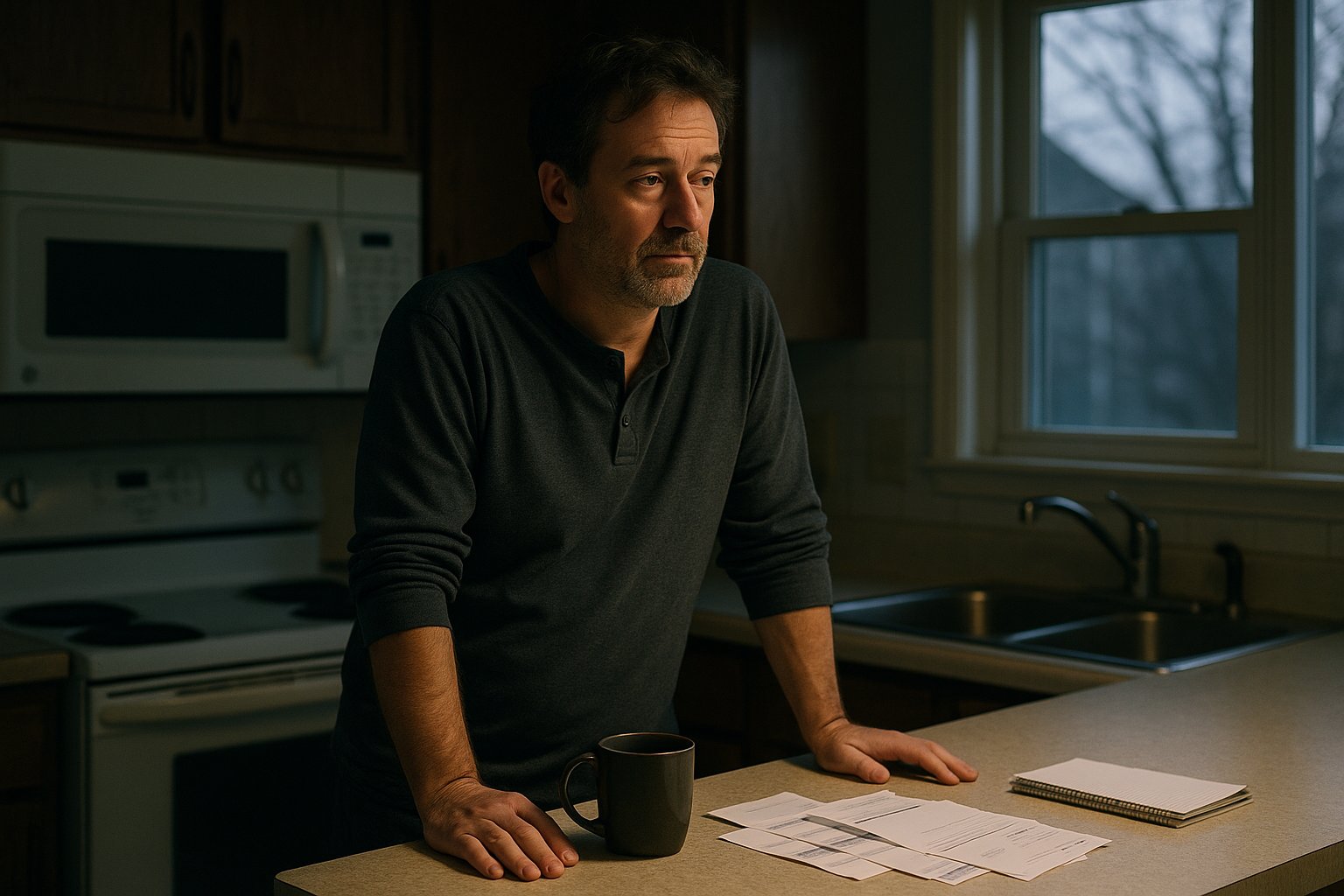
You look around at your job, your body, your marriage, your money, your energy, your half-finished ideas, and it starts to feel like the verdict is in.
This is it.
This is who you became.
This is what your life turned into.
Great news, right?
Yeah, probably not. At least not if you stop the story right there.
Orson Welles once said, “If you want a happy ending, that depends, of course, on where you stop your story.”
That line hits harder in midlife than it probably should. Because a lot of guys don’t feel like they’re living a story anymore. They feel like they’re sitting in the credits after a movie that didn’t land.
But what if you’re not at the ending?
What if you’re in the part that only looks final because you’re too close to it?
Why Midlife Feels Like The Ending
Midlife has a way of making everything feel settled.
Not good settled. More like cement settled.
Your routines get tighter. Your responsibilities get heavier. Your calendar fills up with stuff you don’t even remember choosing. Your body starts giving you feedback you didn’t ask for. Your old dreams don’t disappear, exactly. They just get quieter.
Then one day, you look at your life and think, “Well, I guess this is it.”
That thought can scare the shit out of you because it sounds so reasonable.
You’re not twenty-five anymore. You can’t pretend time is unlimited. You’ve got bills, people counting on you, habits that have been running for decades, and a long list of things you were going to do “someday.”
Someday starts to feel like a joke.
That’s why feeling stuck in midlife is so heavy. It’s not only about being bored or burned out. It’s the fear that the stuck place tells the truth about you.
You don’t just think, “I’m in a rough spot.”
You think, “I wasted it.”
That’s a different kind of pain.
And once that thought gets in, it starts rewriting the past. Every bad choice becomes evidence. Every missed chance becomes a sentence. Every compromise becomes proof that you didn’t have what it took.
But that’s the trap.
You’re judging the whole story from the worst scene.
The Problem Is Where You Stopped Looking
Emma Straub wrote, “Any story could be a comedy or a tragedy, depending on where you ended it.”
That’s the whole thing.
End the story when the guy loses his job, and it’s a tragedy.
End it when he finally stops building his identity around work, and it might become something else.
End it when the marriage is cold, and it’s a tragedy.
End it after he gets honest about the resentment, the avoidance, the years of quiet scorekeeping, and maybe the story changes shape.
End it when his body feels wrecked, his ambition feels dead, and he’s pissed at everyone who seems to have figured life out.
Tragedy.
But keep going?
Now you’ve got a different question.
Not “How did I end up here?”
More like, “What happens if this isn’t the end?”
That question matters because a lot of guys mistake a turning point for a final chapter. They feel pain and assume it means failure. They feel regret and assume it means they’re done. They feel embarrassed by what they haven’t built yet, so they stop building altogether.
That’s where the damage happens.
The hard part of midlife isn’t that your life becomes impossible to change. The hard part is that you have enough history to make giving up sound logical.
You can prove the case against yourself pretty easily.
You tried before. It didn’t stick.
You started the thing. You quit.
You promised yourself you’d get in shape. Again.
You said you’d write, build, leave, repair, start over, speak up, stop drinking so much, stop pleasing everybody, stop living like your own needs are some optional side project.
Then life got loud, and you folded back into the same shape.
So when the stuck feeling comes back, you don’t treat it like a signal.
You treat it like a verdict.
That’s the part I want you to question.
A Close-Up Makes Everything Look Worse
Charlie Chaplin had another version of this idea: “Life is a tragedy in close-up, but a comedy in long shot.”
Close-up is where most guys live when they’re in pain.
You’re zoomed in on the awkward conversation, the bank account, the diagnosis, the mirror, the silence from your wife, the email from your boss, the number on the scale, the thing you said five years ago, the thing you didn’t say twenty years ago.
Up close, it all feels enormous.
One bad week feels like your whole personality. One fight feels like the marriage. One failure feels like your full resume. One rough season feels like the entire forecast.
That’s what close-up does.
It removes context.
If you’ve ever watched an old movie, you know how much the camera decides what you feel. Put the lens tight on someone’s face during a breakdown, and the room disappears. You don’t see the door. You don’t see who’s coming. You don’t see what happens after.
You only see the pain.
Midlife can do the same thing.
You get so close to the disappointment that you lose the long shot. You forget the parts where you survived things you thought would break you. You forget the years where you carried too much and still kept people fed, housed, safe, or sane. You forget that some of your “failures” were really survival strategies that worked until they didn’t.
That doesn’t make everything okay.
I hate when people turn pain into a greeting card.
Some seasons really are brutal. Some choices really do cost you. Some things don’t get cleaned up just because you found a better frame for them.
But perspective matters.
Researchers who study midlife have been pushing back on the old “midlife crisis” stereotype for years. In a recent Guardian interview, lifespan psychologist Margie Lachman argued that midlife is often less of a collapse and more of a period where guys can still change behavior, identity, health, and direction: The ‘midlife crisis’ is overblown.
That doesn’t mean you slap a positive sticker on everything.
It means you stop calling the current scene the whole movie.
The Story You Tell Yourself Starts Running The Room
Here’s where this gets practical.
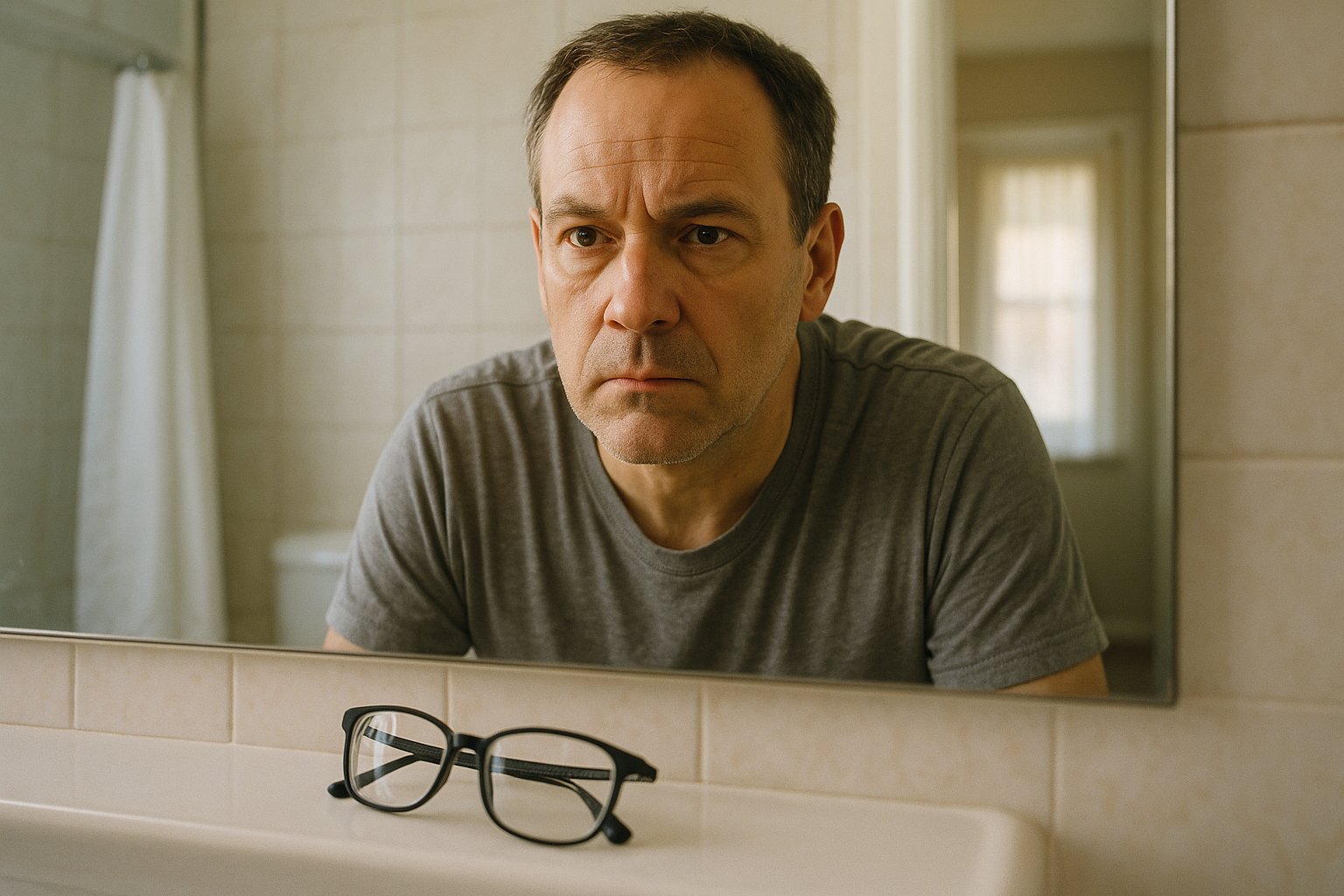
The story you tell yourself in midlife doesn’t stay in your head. It starts making decisions for you.
If the story is “I missed my shot,” you stop taking shots.
If the story is “My wife already knows who I am,” you stop showing her anything different.
If the story is “I’m too far gone physically,” you treat your body like a lost cause.
If the story is “I’m just the guy everybody needs,” you keep saying yes until there’s nothing left that feels like yours.
That last one is sneaky as hell.
A lot of guys don’t feel stuck because they’re lazy. They feel stuck because they built a life around being useful, agreeable, steady, and low-maintenance. Everybody else’s needs got first claim. Their own wants got whatever scraps were left.
Then they hit their 40s or 50s and wonder why they feel hollow.
I’ve written about that pattern before in Nice Guy Syndrome in Midlife: The Tax Nobody Warned You About, because it shows up everywhere once you know what to look for.
You become the dependable guy.
Then you resent being depended on.
You become the easy guy.
Then you get pissed when nobody treats your needs like they matter.
You become the guy who can handle it.
Then one day you realize handling it became your whole identity.
That’s not a personality flaw. It’s a story you kept living because it kept you safe, useful, or approved of.
But if that story is making you disappear, you don’t owe it another decade.
You Don’t Need A Perfect Ending. You Need More Story.
This is where guys sometimes get it wrong.
They hear “your story isn’t over” and think it means some big movie ending has to be coming.
New career. New body. New business. New marriage energy. New house. New confidence. New life.
Maybe.
But I’m not talking about fantasy.
I’m talking about refusing to end the story at the exact point where you feel most ashamed.
You don’t need a perfect ending. You need another honest page.
That might mean one real conversation you’ve avoided.
It might mean getting bloodwork done because you’ve been guessing about your health for too long.
It might mean writing for thirty minutes before the house wakes up because the part of you that wants to create isn’t dead. It’s just underfed.
It might mean telling your wife the truth without turning it into a courtroom.
It might mean admitting that the job that paid the bills also flattened something in you.
It might mean looking at your money without flinching.
It might mean walking every day because you’re tired of treating your body like a punishment.
None of that sounds dramatic.
Good.
Most real change doesn’t feel dramatic at first. It feels annoying, humbling, and way less impressive than the fantasy version.
But that’s how the story keeps moving.
Not with some cinematic speech.
With one choice that refuses the old ending.
What To Do When You’re Still In The Bad Scene
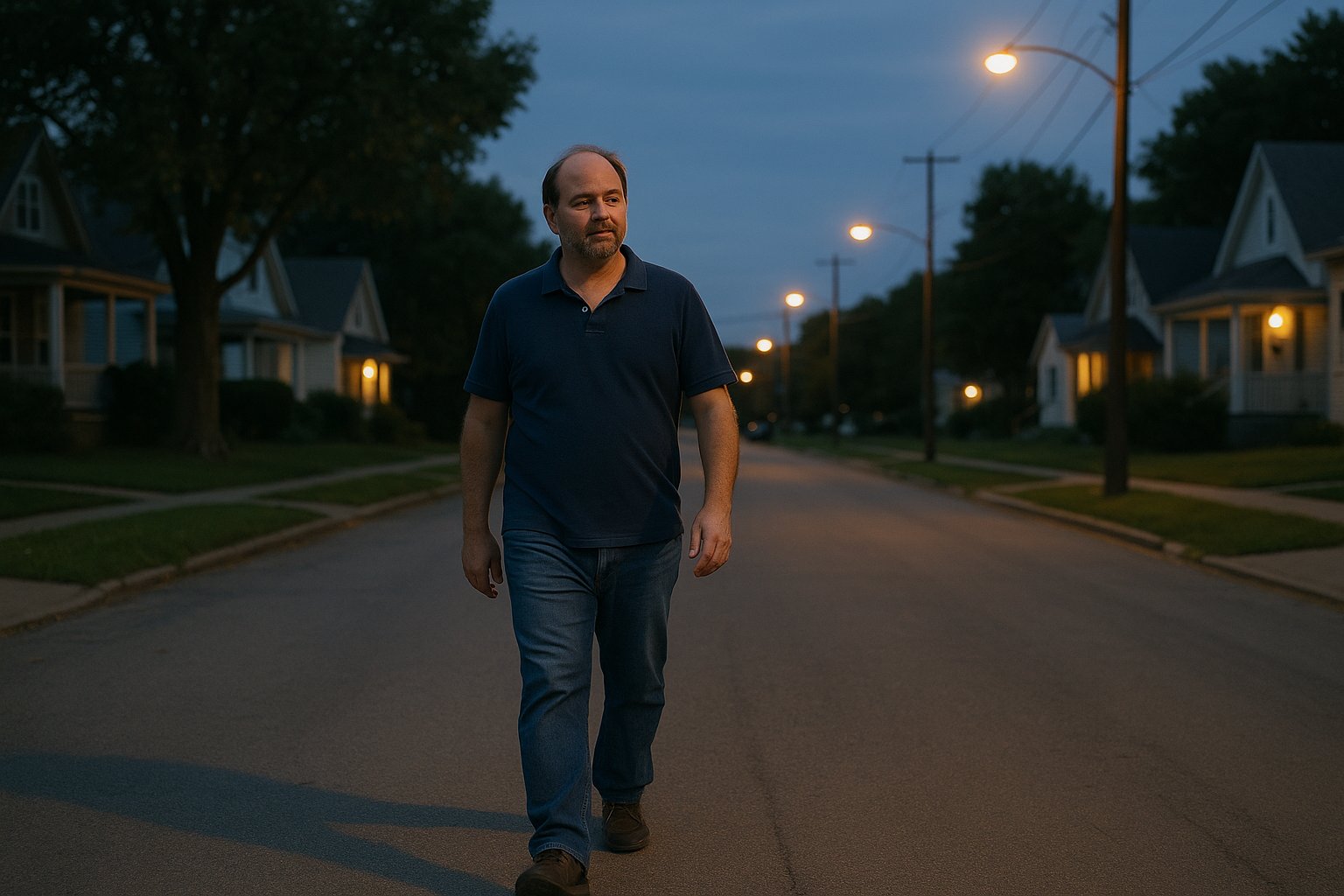
If you’re feeling stuck in midlife right now, don’t start with a total life overhaul.
That usually becomes another way to avoid the truth.
Start smaller and sharper.
Ask yourself where you’ve placed the ending.
Did you end the story at the divorce?
The layoff?
The weight gain?
The business that didn’t work?
The years you spent drinking too much, zoning out, people-pleasing, working too much, or staying quiet because speaking up felt too expensive?
Name the scene where you stopped.
Not the whole life. The scene.
That distinction matters.
Then ask a better question.
“What would I do this week if this was a turning point instead of a verdict?”
Not forever.
This week.
Who would you call?
What would you schedule?
What would you stop pretending you’re fine with?
What would you restart without making a giant announcement?
What would you tell the truth about, even if your voice shakes a little?
You’re not trying to fix your entire life by Friday. You’re trying to prove to yourself that the story still responds when you move.
That proof matters more than motivation.
Motivation comes and goes. Proof stacks.
One walk. One page. One honest conversation. One cleaned-up account. One boundary. One doctor appointment. One hour spent on the thing you keep saying matters.
That’s not glamorous.
It’s better than glamorous.
It’s real.
Don’t Call The Ending Too Early
The dangerous thing about feeling stuck in midlife is how convincing it feels.
You’re tired, so you call it wisdom.
You’re disappointed, so you call it realism.
You’re scared to want something again, so you call it maturity.
But sometimes that mature, realistic voice in your head is just fear wearing reading glasses.
Chew on that for a minute.
Maybe this part of your life feels like a tragedy because you stopped the story in the wrong place.
Maybe the next part won’t erase what happened. It probably shouldn’t.
But it can change what it means.
Don’t call the ending from inside the worst scene.
Keep going long enough to find out what kind of story this actually is.
If this hit home, join The Climb. I write for guys who are done pretending “fine” is good enough.