A lot of guys say they want a meaningful life.
Fair enough.
But do you want the boring parts that come with one?
The reason I ask that is because we’ve been trained to treat boredom like a warning sign. Like if something feels repetitive, inconvenient, frustrating, or slow, maybe that means we’re doing the wrong thing.
And I get why that feels true.
Earlier generations didn’t necessarily walk around with some nihilistic view of life. They didn’t all think, “Life is miserable, so endure it.”
A lot of them thought something closer to, “This is what a person is supposed to do.”
Family. Faith. Duty. Survival. Community. Honor. Land. Craft. Nation.
Life was hard, repetitive, unfair, and full of obligation. But those obligations usually sat inside some larger meaning system.
Then the modern world did what the modern world does. Industrialization, consumerism, labor-saving technology, psychology, advertising, and mass media slowly changed the way people thought about life.
Life stopped being framed as something you were responsible for and started being framed as something that should satisfy you.
And look, a lot of that was good.
People started questioning abusive marriages, dehumanizing work, rigid social roles, and pointless suffering. Good. There’s no virtue in misery just for misery’s sake.
But then the idea kind of mutated.
“Your life should contain joy” became “you should feel good most of the time.”
“Find meaningful work” became “work shouldn’t feel like work.”
“Be true to yourself” became “avoid anything that doesn’t feel authentic.”
“Life is short” became “anything boring is a waste of life.”
And that right there is where the happiness vs meaning conversation gets uncomfortable.
There’s more to life than being happy is one of those ideas that sounds obvious until you actually apply it to your calendar, your marriage, your body, your work, and the stuff you keep quitting.
Because most things worth having don’t feel good consistently while you’re doing them.
Writing a book? You’re going to rewrite paragraphs you’re sick of seeing.
Building a business? Get ready for emails, bookkeeping, follow-ups, rejection, and fixing the same stupid problem for the eighth time.
Marriage? You’ll need to have conversations you’d rather avoid.
Parenting? Can you say repetition?
Your health? Same movements. Same sensible foods. Same decision, over and over again.
Even craftsmanship is more correction than creation.

That’s the part we don’t like to admit.
Mastery isn’t intensity. Most of the time, it’s sustained tolerance for monotony.
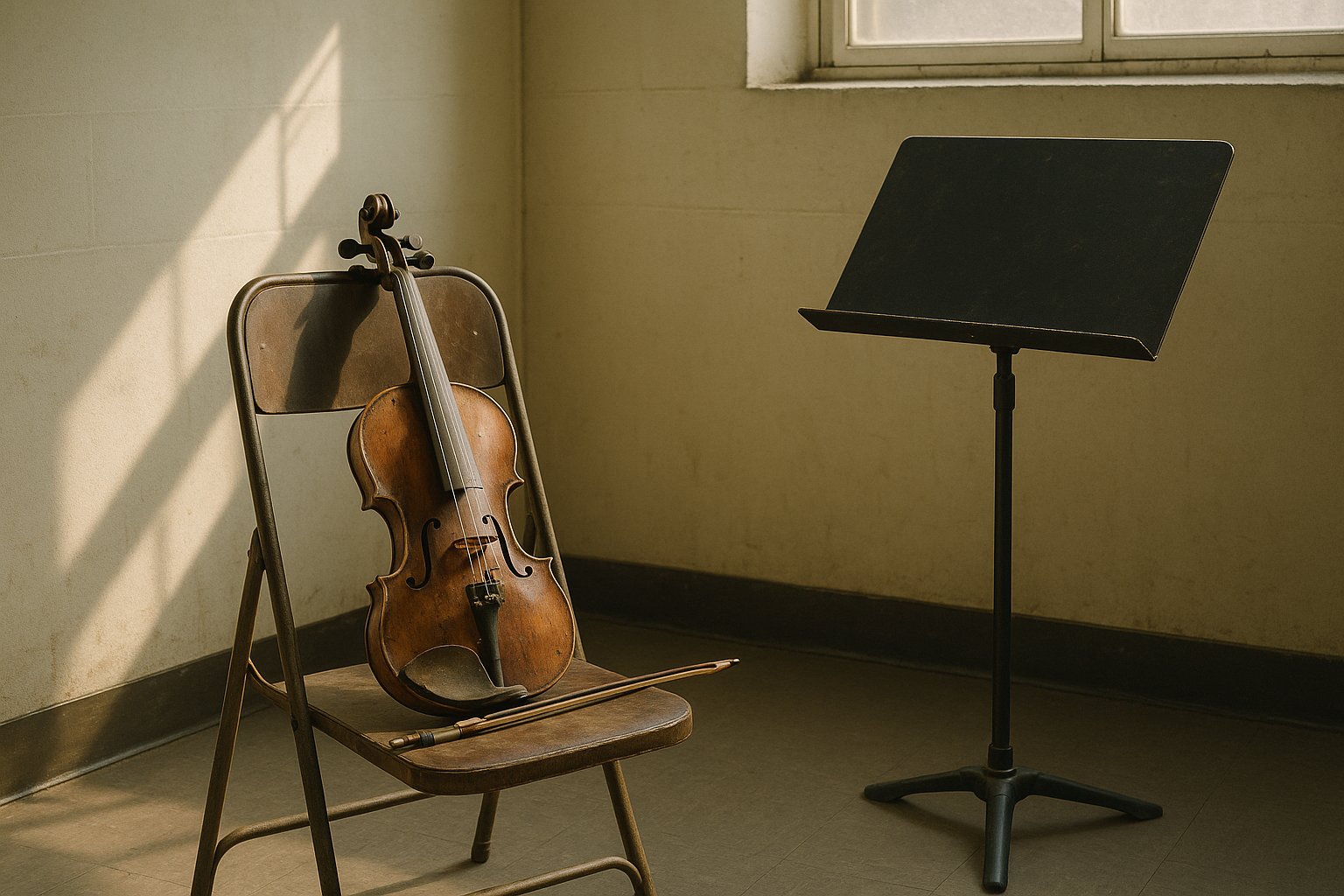
I remember Mark Manson telling a story about when he was studying music in college. He thought he practiced a lot until he roomed with a Russian violin prodigy who practiced basically all day. When Manson asked him to use a practice room like everyone else, the guy said he did.
The practice rooms had a four-hour limit.
He was burning through that before breakfast.
I’m sure I’m butchering some detail there, but the point holds.
There’s a massive difference between liking the identity of being good at something and wanting the daily reality of becoming good at it.
Almost everybody wants the finished book.
A lot fewer want draft twenty-two.
Almost everybody wants the successful business.
A lot fewer want the two hundred unanswered calls.
Almost everybody wants the body, the marriage, the calm nervous system, the reputation, the skill.
A lot fewer want the reps.
Midlife Identity Crisis in Men: Too Many Roles
And if you haven’t caught it yet, there’s a subtler point here too.
Boredom isn’t just the price you pay for mastery. A lot of times, boredom is the gatekeeper.
At first, repetition feels empty because beginners can’t notice the differences yet.
To a new musician, playing the same passage fifty times looks like doing the same thing fifty times.
To an expert, it’s fifty tiny adjustments in timing, pressure, tone, posture, and feel.
The work gets deeper because the person can notice more.
Does that mean the violin prodigy’s life is automatically healthy or something we should copy?
No. Definitely not.
Extreme dedication can turn into obsession, avoidance, compulsion, or identity loss. A guy can master the violin and still neglect every other thing that makes him human.
So the lesson isn’t “practice eight hours a day.”
The lesson is that anything you genuinely value will eventually ask you to keep going after the fun part wears off.
That’s the happy medium.
Not asceticism. Not hedonism. Something closer to mature pleasure.
Immature pleasure asks, “What would feel good right now?”
Mature pleasure asks, “What kind of life will feel deeply satisfying because I was willing to do what it took?”
And more often than not, that second one includes boredom, frustration, uncertainty, duty, delayed reward, and a shit ton of repetition.
I think the pendulum has swung too far. Not because people are lazy in some broad moral sense. That’s too easy.
I think we’ve been trained to see resistance as a sign.
If the task is boring, maybe it isn’t your passion.
If the relationship is hard, maybe it isn’t meant to be.
If the work feels repetitive, maybe you’re in the wrong career.
If progress is slow, maybe the method doesn’t work.
Sometimes those conclusions are true.
But too often, boredom doesn’t mean something’s wrong.
Sometimes it means you finally got to the part where the real work starts.

We’ve gotten pretty good at helping people escape unnecessary suffering. We’re terrible at teaching them how to willingly endure necessary discomfort.
And without that distinction, guys either suffer pointlessly or quit too early.
Life shouldn’t be needlessly miserable. You don’t earn moral points for suffering.
But a meaningful life will contain a lot of repetition, obligation, inconvenience, and work that doesn’t feel meaningful while you’re doing it.
Happiness isn’t found by eliminating those things.
A lot of times, it’s built through them.